


Russia Defence Support (Credit: OpenAI)
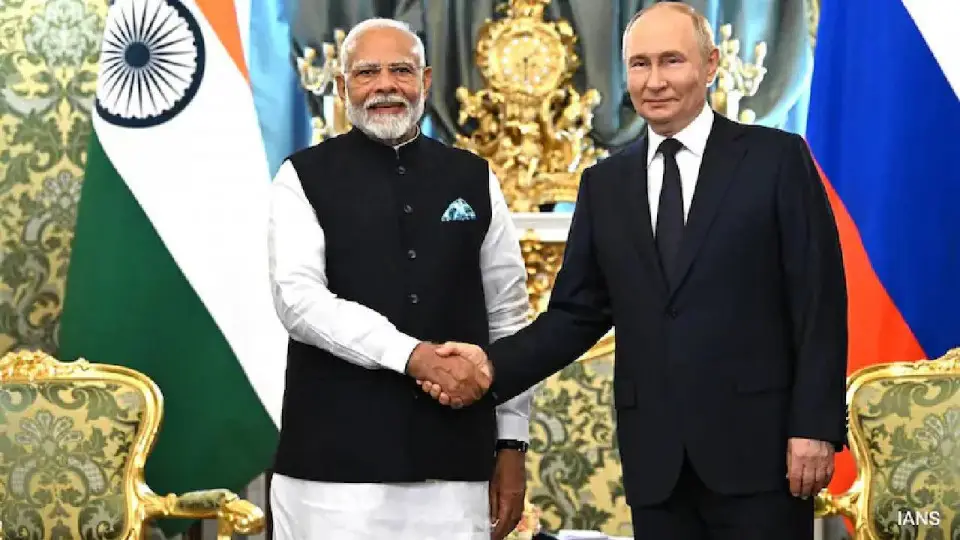
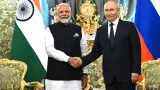
New Delhi: Experts confirm that Russia’s defence cooperation played a pivotal role in shaping India’s battlefield dominance during Operation Sindoor. Military teams used Russian-origin air defence systems, fighter jets and precision missiles to counter threats effectively. The support significantly reduced enemy capability and enhanced India’s response strength. With Russian President Vladimir Putin scheduled to visit New Delhi on 4–5 December, sources believe the bilateral talks will focus heavily on accelerating pending defence deals. Strategic experts claim that this summit may mark a new era of hard-power collaboration.
India had signed a Rs. 40,000 crore deal in 2018 for five squadrons of Russia’s S-400 missile system. Three were delivered successfully, while two remain pending due to the Ukraine conflict. During Operation Sindoor, the system’s performance proved highly decisive. Senior officials now want to fast-track the delivery of the remaining units. Talks may also include acquiring five additional squadrons to strengthen national air defence capability. The system is known for detecting and neutralising enemy missiles and aircraft well before they enter Indian airspace, making it a central pillar of force projection strategy.
India is evaluating the purchase of Russia’s fifth-generation Sukhoi-57 fighter jet, which is designed for stealth missions, deep-strike operations and tactical superiority. Russia has proposed multiple offers to India for this aircraft. Defence sources indicate that discussions may progress during the upcoming Modi–Putin summit. Analysts believe that acquiring such platforms could help India maintain aerial dominance in high-conflict scenarios. Military planning teams view this aircraft as necessary to keep pace with evolving threats and to maintain long-term deterrence capability.
One of the finest examples of India–Russia defence collaboration is the BrahMos supersonic cruise missile. The name is derived from India’s Brahmaputra River and Russia’s Moskva River, symbolising the two nations’ friendship. Experts state that BrahMos played a critical role during Operation Sindoor due to its extreme speed and accuracy. It enables India to strike targets deep inside hostile territory. Senior missile analysts assert that no other missile globally matches its operational reliability. It has been a major deterrent force and will likely expand further under the upcoming defence agreements.
The defence relationship between India and Russia extends back several decades. In the 1970s, India operated Russian-supplied SAS-2 missiles and MIG-21, MIG-23, MIG-27, MIG-29 and MIG-25 fighter jets. Analysts note that these platforms shaped India’s air power fundamentals. The T-90 tank also helped reform India’s ground combat readiness. Senior official Dr V.K. Saraswat highlighted that these historic defence ties laid the foundation for tactical advantage. The technology supplied through past agreements continues to protect India’s borders even today, proving how deep this strategic cooperation runs.
Sources suggest that upcoming talks between PM Modi and President Putin will centre around expansion of military cooperation. India may seek rapid delivery timelines and manufacturing partnership for air defence technologies. Experts believe that integrating more Russian systems could help India counter evolving regional threats. Strategic planners view the summit as an opportunity to reinforce long-term defence bonds. The partnership is likely to include technology transfer mechanisms and capability expansion modules that could improve India’s future readiness.
Operation Sindoor acted as a proof point demonstrating how Russian support directly contributed to India’s operational superiority. Military strategists confirm that decisive battle advantage came from timely technological assistance. Experts believe the outcome has reshaped India’s defence planning model. Analysts expect the upcoming summit to focus on further enhancing joint military frameworks. Cooperation in strategic sectors may increase significantly. Defence observers suggest that this partnership could define India’s future warfare doctrine as both nations seek deeper alignment against emerging global challenges.




Copyright © 2025 Top Indian News


